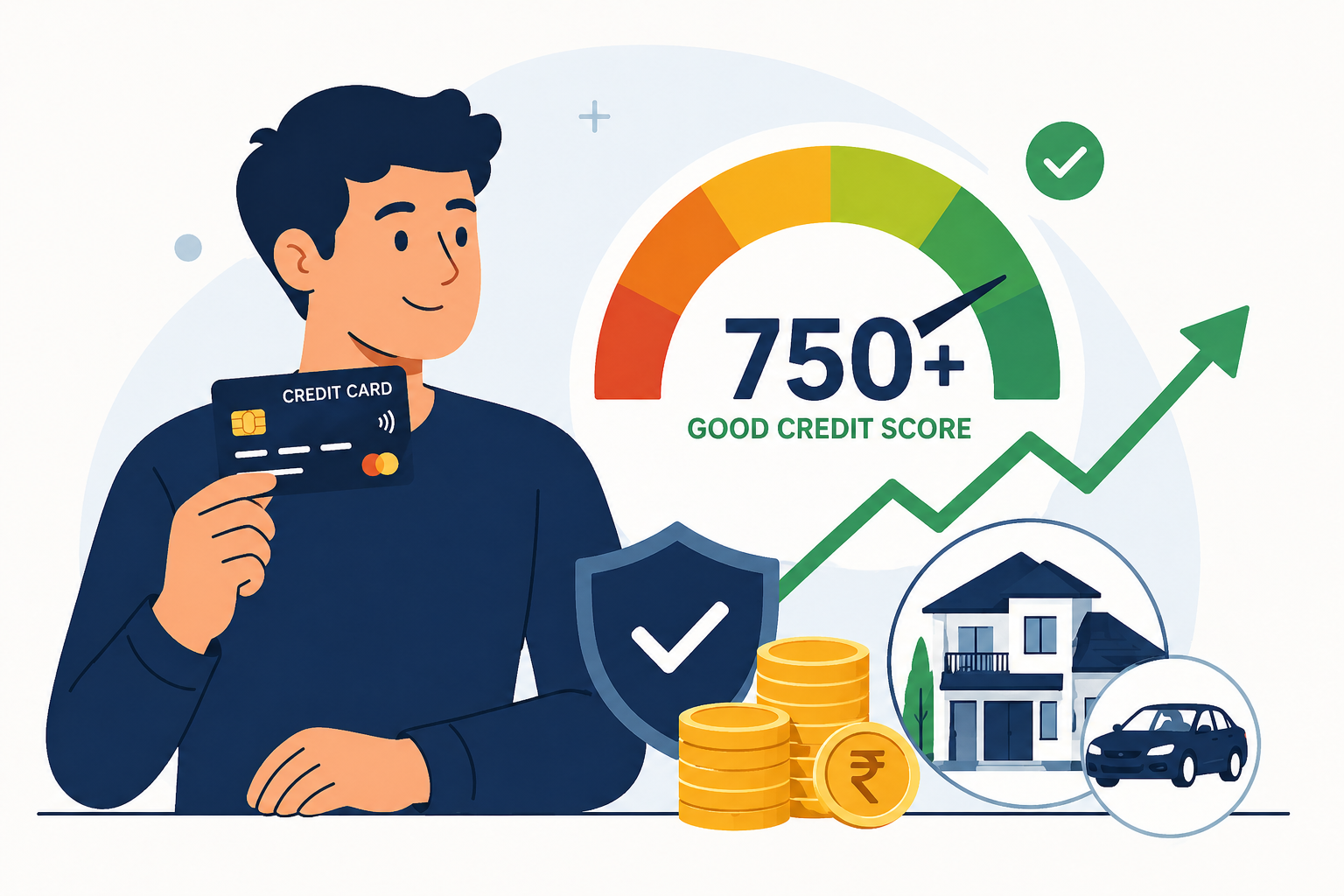
How Credit Cards Build Your Credit Score (And Save You Lakhs)
When I got my first credit card, it wasn’t for rewards or cashback.
It was because I had a problem.
The bank tried to check my CIBIL score, and there was nothing. No loans, no history, no record. Just blank.
At first, I thought that was a good thing. I had never taken debt, so I assumed I was financially safe.
But I quickly realized something important.
In the financial system, having no history doesn’t make you safe. It makes you invisible.
I’m still figuring this out myself, but that moment completely changed how I look at credit cards.
Where Most of Us Start
If you’re in your early 20s, earning your first salary, and using only a debit card, you’re probably in the same position I was.
No EMIs. No loans. No credit score.
Which sounds responsible, but from a bank’s perspective, it just means they have no idea how you handle credit.
And that becomes a problem later.
Why a Credit Card Actually Matters
A credit card is the simplest way to start building your credit score.
You spend small amounts, repay on time, and slowly build a track record.
It feels basic, but this one habit quietly decides how expensive your future loans will be.
Where This Becomes Real
Let’s say you plan to buy a house worth around ₹70 lakh in a few years.
You take a loan of ₹55 lakh for 20 years.
Now compare two situations:
- Strong credit score: around 8.5% interest
- Weak credit score: around 9.5% interest
At 8.5%, your EMI comes to roughly ₹47,700.
At 9.5%, it jumps to about ₹51,200.
That’s a difference of ₹3,500 every month.
Over 20 years, that adds up to more than ₹8 lakh.
Same house. Same loan.
Just a weaker credit score making it more expensive.
I’ve Already Seen This Happen
When I bought my bike, I didn’t take the loan in my name.
I used my brother’s.
Not because I couldn’t afford it, but because he had a strong CIBIL score and I didn’t.
Because of that, he got a better interest rate and smoother approval.
That’s when it really clicked for me.
Your credit score isn’t just a number. It directly affects your options.
Where Things Go Wrong
This only works if you use the card properly.
I’ve seen people spend around ₹40,000 on a credit card and keep paying just the minimum due.
It doesn’t feel serious at first.
But after a few months, they end up paying thousands extra in interest just to clear the same bill.
That’s the trap.
The same system that rewards discipline becomes very expensive if you misuse it.
How I Approach Using My Credit Card
I keep it simple.
The biggest rule I follow is treating my credit card like a debit card. If I spend money, I assume it’s already gone.
I also make sure I pay the full amount every time.
Another thing I’ve learned is to not use too much of the credit limit.
So I try to keep usage controlled and consistent rather than high and unpredictable.
What I’d Do If I Was Starting Today
If I had to start from zero again, I’d keep it simple.
- Get a basic credit card from my salary bank
- Use it for 1–2 fixed expenses
- Set auto-debit for full payment
- Stay consistent for a year
That alone is enough to build a strong foundation.
Final Thought
A credit card won’t make you rich.
But it will decide how expensive your future loans are going to be.
Your credit score isn’t built when you need a loan.
It’s built years before that.
If you’re also starting from zero credit history, I’d genuinely like to know how you’re approaching it.