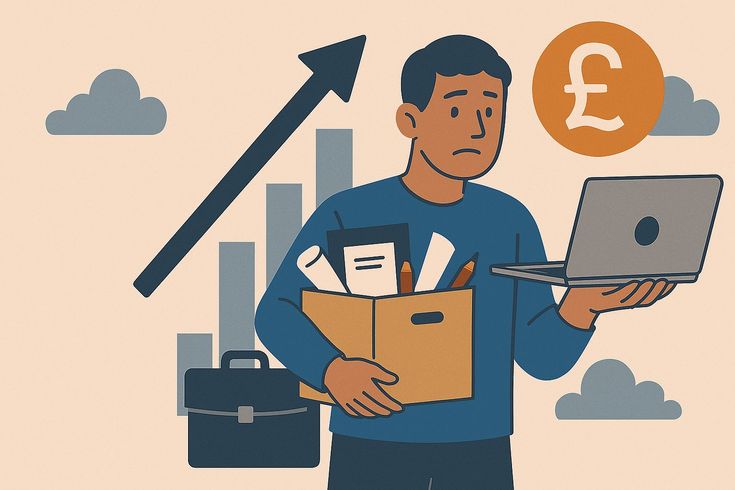
When I switched jobs last July, my salary went up meaningfully. And for the first few months, I had no idea where the extra money was going.
Some of it went to college fees - fair enough, that was real. But the rest? It was quietly disappearing into things I couldn't fully account for. Eating out more. Slightly better versions of things I already bought. Nothing dramatic. No single "big" mistake. Just a slow, comfortable expansion of spending that matched the new number in my account.
It took me six months of intentional investing to actually feel like I had control over that hike. Six months.
Most people don't realize a hike is gone until they look up three months later and think: "where did that go?" That's the trap this article is about - and more importantly, how to avoid it.
💸 The hike isn't the money. It's the moment.
Here's the mental model that changed things for me: a salary hike isn't a financial event. It's a decision window.
You get maybe 2-3 weeks between learning your new CTC and seeing that first bigger paycheck. That window is the only time the decision is actually yours. Once the money lands, once your UPI notifications feel normal at that new level, once you've made one or two small upgrades, the decision has already been made. Your lifestyle made it for you.
This is why most hikes disappear. Not because people are irresponsible. Because they never actually decided what to do with the money. They just... received it.
🎓 What lifestyle inflation actually looks like
It doesn't look like a shopping spree. That's the version people imagine when they hear "lifestyle creep" and feel smug that it doesn't apply to them.
The real version looks like this: you start eating out one more time a week (roughly ₹1,000-2,000 extra per month). You upgrade from bus to AC local because you can now (₹800-1,200 extra). You finally subscribe to Spotify Premium because ₹119 feels trivial now. You pick up a slightly better version of something you were already buying - shoes, skincare, groceries.
None of these feel wrong. Some of them aren't wrong. The AC local isn't lifestyle creep if you actively decided: "I'm going to spend ₹1,000 more on commute and account for it." That's a deliberate quality-of-life upgrade. That's fine.
The problem is when these things happen passively. When you're not deciding, you're just adjusting. When each individual thing seems reasonable but the total quietly eats the entire hike.
I know this because I tracked mine. The eating out crept up by about ₹3,000 a month. Clothing, occasionally, another ₹2,000. That's ₹5,000 gone before I'd consciously chosen anything.
✅ The decision that has to happen before the money lands
So here's what I'd actually do if I got a hike today - and what I'm trying to do going forward.
Before the first new paycheck hits:
- Calculate the actual take-home difference (not CTC, take-home after TDS)
- Decide a split deliberately. Something like:
- 50-60% of the hike increase goes straight into SIP or investments
- 20-30% can go toward intentional lifestyle upgrades (things you've actively chosen)
- 10-20% kept as buffer for the first month to see what actually changes
There's no sacred ratio here. The point isn't the exact percentage. The point is that you make the decision, not your lifestyle.
If your hike adds ₹8,000 to your take-home, that's roughly ₹4,000-5,000 into investments before you've had a chance to adjust your spending. Set up the SIP increase immediately. If you wait two months, your baseline spending will have quietly absorbed most of it and the SIP increase will feel like a sacrifice instead of a default.
I've done this with bonuses too. When the market dips and I get lump sum money, I put it in while it still feels "extra." Once it settles into your mental accounting as part of your normal float, you'll find reasons not to invest it.
🧰 The upgrades worth making (and how to tell the difference)
Here's the test I use: did I think about this before the hike, or did I start thinking about it after?
If you've been squeezing into a local train in peak summer for two years and have been meaning to switch to AC when you could afford it - that's a legitimate upgrade. Pre-existing friction, intentional decision.
If you suddenly want to upgrade your phone two weeks after your appraisal, even though your current phone works fine - that's the hike looking for somewhere to go. I was in this exact situation. My phone works. I didn't buy a new one. Not because I'm some ascetic, but because I couldn't actually justify it beyond "I have more money now."
Same with the bike. I wanted one. I bought one - but I sized it to my actual use case, not to what I could technically afford on EMI. The EMI is done now. I'm not locked into a payment that made sense in a moment of excitement and makes less sense every month after.
The pattern in both cases: ask yourself whether you'd want this thing equally if your salary hadn't changed. If the answer is yes, buy it. If the only reason it's on your mind is the hike - wait 30 days and see if you still want it.
💼 What to actually do this appraisal cycle
If your hike just came through, or is coming in the next few weeks:
- Do the take-home math first. CTC is a lie. Know what lands.
- Set up the SIP increase before you get the first paycheck. Groww, Zerodha Coin, whichever you use - schedule it now.
- Write down two or three upgrades you actually want. Not everything that crosses your mind, just two or three things that have real friction behind them.
- Give the rest of the hike 60 days before spending it. If something still feels necessary after 60 days, it probably is.
💡 Tip: If you get a bonus alongside your hike, treat the bonus as completely separate. Hike is for long-term restructuring (investments, recurring upgrades). Bonus is where you give yourself one deliberate splurge - guilt-free, accounted for - and invest the rest as a lump sum, ideally when the market gives you a dip.
🚀 Final word
A hike isn't extra money. It's a mirror. It shows you exactly what your default financial instincts are.
If you don't decide, your lifestyle decides for you. And your lifestyle is very good at spending.
Decide first. Automate the investment. Then enjoy what's left, without the anxiety of wondering where it went.
Got questions about how to split your specific hike, or stuck on how much to increase your SIP by? Drop a comment - happy to help think it through.